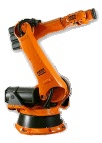
13,750 Vera CPUs. 27,500 Rubin GPUs. 140 megawatts. That is not a teaser. That is Japan putting a hard number on physical AI. NVIDIA said today it is working with Noetra Corp. to launch the factory, and AP reported that Fujitsu is leading the broader push with FANUC, Yaskawa Electric, and Kawasaki Heavy Industries.
That number lands differently because Japan is not treating robotics like a side project. The country's AI Robotics Strategy says it wants to capture more than 30% of the global AI robotics market by 2040. That is a national industrial target, not a product launch. Jensen Huang put the tone in plain English when he said, "Japan invented modern manufacturing" and called this "the next industrial revolution."

The stack is the point
NVIDIA says the new AI factory will support Japan's FRONTia Project and help develop open multimodal foundation models for AI agents, digital twins, robotics, and physical AI. That is the important shape of the story. This is not one model or one robot. It is compute, training data, software, and deployment discipline lined up in one program.
Fujitsu's own release makes the control story clearer. It says the companies are trying to build a collaborative control platform "bridging the digital and physical worlds." That is the part that usually gets hand-waved in robot demos. The robot is not the product. The control path is.
Physical AI has the problem every integration project has. The money sits in the jump between systems, not in the dashboard that names them. If the digital layer cannot talk to the physical layer cleanly, the robot just becomes another expensive island.
Sam C BarthThe bill shows up in your stack eventuallyI help operators keep HubSpot and RevOps simple enough that bigger shifts do not break the basics.Visit samcbarth.comHospitals first
Kawasaki's release shows where the pressure lands first: healthcare. It says the companies will study a hospital solution that ties electronic medical records to robot systems and AI, and that the sector faces "serious challenges, including ageing populations and labor shortages." That makes the use case obvious. Japan does not just need more automation. It needs automation that can live inside care work.
Kawasaki says the work could automate medication transport, specimen transport, outpatient reception, and guidance services. Physical AI stops being a buzzword when it has to move a tray, follow a workflow, and stay useful around people.
Noetra's CEO said, "no single company can solve alone." That is true here. Fujitsu brings systems integration. Kawasaki brings robots and operations. NVIDIA brings the compute and model stack. The national plan only works if those pieces stay aligned long enough to ship something that survives outside the conference room.
This is why the announcement feels bigger than another AI partnership. Japan is trying to turn a robotics tradition into an industrial AI platform with a real bill attached. If the plan works, the country gets a path from factory floor to hospital corridor with the same control layer underneath. If it slips, it is just another announcement with good optics. The harder test is whether the first useful robot shows up in a place where the work is messy, the context is live, and the handoff cannot fail.